Leave Your Message

What Is the Best Pop Art Box Supplier in China?

Choosing the best Pop Art Box supplier in China takes more than comparing colorful product photos. Buyers need reliable print quality, sturdy construction, consistent production, and clear communication. A vivid design can attract attention, but weak color matching or crushed corners can undermine the whole presentation. Details matter.

The market context is significant. Smithers’ industry report, The Future of Global Packaging to 2028, forecasts that the global packaging market will exceed $1.2 trillion by 2028. This figure covers packaging broadly, not Pop Art Box products alone. It still signals why buyers should assess suppliers carefully: packaging competes for attention while protecting goods through handling and shipping. For a fair comparison, request physical samples, confirm material specifications, and check whether quoted prices include printing, finishing, and packaging.

Design also deserves practical scrutiny. Graphic designer Paul Rand’s often-cited observation is, “Design is the silent ambassador of your brand.” Rand was not a Pop Art Box supplier, so his quote speaks to visual identity, not factory performance. That distinction matters. A dependable supplier should support both. Ask for color proofs, production timelines, quality-control details, and examples of comparable work. Then verify claims against samples and written specifications. No single supplier fits every project. The best choice depends on order size, artwork complexity, budget, and delivery needs. This guide compares those factors to help buyers make a more informed decision.
What Is the Best Pop Art Box Supplier in China?

What Pop Art Boxes Are and Where They Are Used

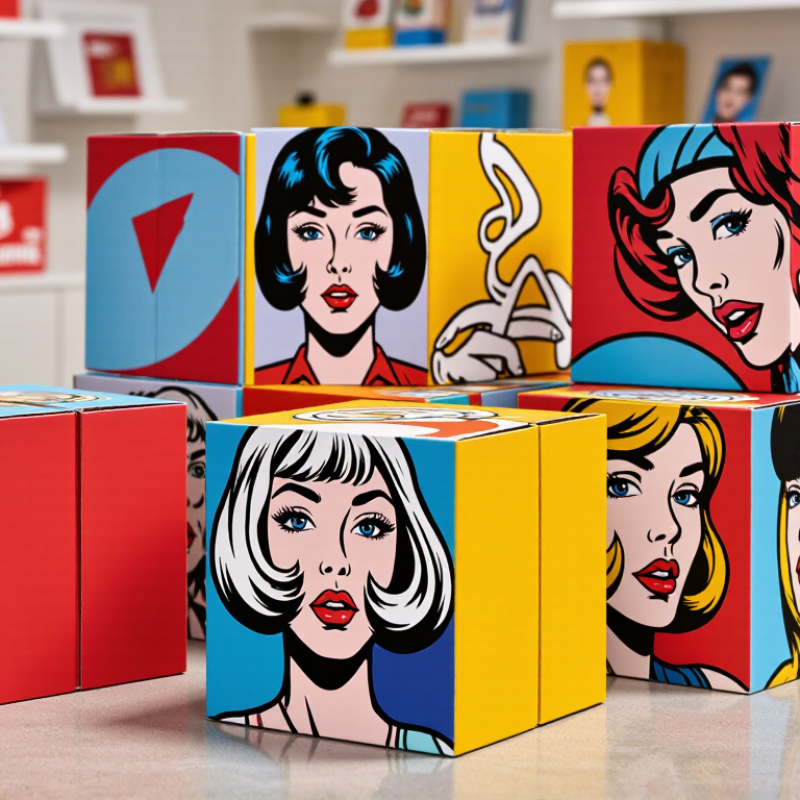
Pop art boxes are packaging or display cartons decorated with bold colors, heavy outlines, comic-style dots, and graphic shapes. Some feature speech bubbles or oversized lettering. The look borrows from pop art, but the box still has a practical job: protecting the item and presenting it clearly. A sturdy paperboard carton can hold small accessories, cosmetics, stationery, or gift items. The artwork may be printed across the lid and sides, so the design remains visible from different angles. Bright does not always mean effective. Too many patterns can make product details hard to read.

These boxes appear in retail displays, product launches, gift packaging, and event merchandise. A shop might stack them near a checkout, while an event organizer could use them for attendee gifts. For a custom order, check the box dimensions, board thickness, print finish, and color consistency with a physical sample. Small details matter: a loose lid or scuffed corner can weaken the whole presentation. I have seen striking mock-ups lose impact when the actual colors look dull under store lighting. That part is easy to overlook. A reliable supplier should explain material options and provide clear production proofs, though the proof may not perfectly match the final print. Planning for that gap helps avoid surprises.

What Is the Best Pop Art Box Supplier in China? - What Pop Art Boxes Are and Where They Are Used

Dimension Details Common Uses What to Check When Sourcing
What a pop art box is A box printed or decorated with pop art-inspired graphics, such as bold colors, repeated motifs, comic-style imagery, or high-contrast patterns. Product packaging, gift presentation, retail displays, and themed events. Confirm that the artwork, colors, dimensions, and intended use are clearly specified.
Common box styles Folding cartons, rigid setup boxes, and corrugated boxes are common packaging formats; the suitable style depends on the product and required protection. Folding cartons suit many lightweight retail items; rigid boxes are often used for presentation; corrugated boxes are used when shipping protection is important. Ask for a structure recommendation based on product weight, fragility, shipping method, and display needs.
Materials Paperboard is commonly used for cartons and rigid box coverings; corrugated board is commonly used where cushioning and shipping strength are needed. Retail packaging, presentation boxes, and transit packaging. Request material specifications and samples. Check board thickness, construction, and suitability for the packed item.
Printing and finish Printed artwork may be paired with finishes such as matte or gloss coating, depending on the design and box construction. Branded product presentation, colorful gifts, and point-of-sale packaging. Review a pre-production proof or sample for color, alignment, legibility, and finish before approving production.
Typical applications The artwork can be adapted to different box sizes and structures, but the box should be engineered for the product it will hold. Cosmetics and accessories, small gifts, collectibles, promotional items, and event merchandise. Check product fit, closure, internal protection, storage requirements, and whether the box is for retail display or shipping.
Supplier capability A suitable supplier should be able to discuss structural options, printing requirements, sampling, production, and packing details. Useful for custom orders that require specific artwork, dimensions, or box construction. Compare written specifications, sample quality, communication, production schedule, and quality-control procedures.
Quality checks Inspection can cover dimensions, print placement, color consistency, folding or assembly, and visible damage. Important for both retail-ready packaging and boxes intended for delivery. Agree on inspection criteria and defect handling before placing an order; verify samples against the approved specifications.
How to choose a supplier There is no single best supplier for every project; the right choice depends on box type, artwork, budget, order requirements, and delivery needs. Custom packaging projects at different production scales. Compare itemized quotations, sample results, material details, lead-time commitments, and documented quality processes.

How Pop Art Box Suppliers in China Differ

Pop art box suppliers in China differ less by location than by how they manage color, materials, and production details. One may offer vivid offset printing on sturdy paperboard, while another specializes in smaller runs or quick digital proofs. Ask how the factory checks bright reds, cyan tones, and fine black outlines against your approved artwork. Small shifts can change the whole look. That matters.

Finishing options also vary. Some suppliers can apply matte or gloss lamination, while others offer textured paper or spot gloss on selected shapes. Request a physical sample using the intended board thickness, not just a printed sheet. A sample reveals whether corners crease cleanly and whether the lid fits without forcing. Proofs can mislead. Confirm minimum order quantities, setup charges, and what happens when a batch has visible color differences.

Communication is another useful comparison point. A reliable supplier should explain production stages, provide clear timelines, and flag artwork issues before printing. Ask for photos of the packed boxes and a written inspection checklist. Price alone is a weak signal; lower quotes may exclude tooling, protective packing, or revisions. I would still treat any checklist as incomplete. A careful supplier can reduce surprises, but your own approval of a production sample remains important.

What Is the Best Pop Art Box Supplier in China?

How Pop Art Box Suppliers in China Differ

Compare suppliers on print consistency, materials, minimum order quantity, delivery reliability, quality control, and export packaging. Scores show suggested buyer priorities on a 1–5 scale, not measured supplier ratings or market-survey results. Ask shortlisted suppliers for samples, written specifications, and a production schedule before placing an order.

What Criteria Identify a Reliable Pop Art Box Supplier

A reliable pop art box supplier should make quality visible, not just promise it. Ask for a physical sample made with the proposed board, printing method, and finish. Inspect the corners, folding lines, glue seams, and color consistency under ordinary room light. Small details matter. A bright design can look appealing on screen but lose contrast on textured paper. Request a proof with measured dimensions, material specifications, and agreed color references before approving production.

Check how the supplier handles repeat orders and problems. Ask what tolerances they use for box dimensions, how they inspect finished cartons, and whether they can share sample inspection records. Clear answers are useful; vague claims about “high quality” are not. Also review lead times, packing methods, and how changes are confirmed in writing. A polished sample can still hide uneven production. Even a capable supplier may make mistakes, so agree on an approval process and a practical way to report defects. Price matters, but a low quote without clear material details can make comparisons misleading. Request an itemized quotation and compare like with like.

How to Compare Supplier Quality, Customization, and Cost

Choosing a pop art box supplier in China starts with the physical sample, not a polished catalog image. Check whether the board feels rigid and whether corners stay square after handling. Look closely at fine lines, color alignment, and ink coverage near folds. Small details matter. Ask how the supplier checks production batches, and request photos or records from a recent inspection. A single sample is useful, but it cannot prove every batch will match.

Customization should be tested against your actual artwork and product dimensions. Ask for a dieline, then review text placement, bleed areas, and closure fit before approving printing. A prototype can reveal whether a glossy coating causes glare or whether a small panel creases poorly. These checks take time. They may also expose flaws that are inconvenient to fix, which is exactly why they matter.

Compare costs using the same specifications: box dimensions, board grade, print coverage, finish, order quantity, and shipping terms. A low unit price can exclude setup fees, protective packing, or later revisions. Request a clear written breakdown. Also ask what happens if delivered boxes show color variation or damage. The cheapest quote is not always the best value, though a higher quote does not guarantee better workmanship. Keep your comparison sheet simple, and note any unanswered questions before placing an order.

How to Choose a Supplier for Your Pop Art Box Requirements

Choosing a pop art box supplier in China starts with the box’s job, not its artwork. Specify its dimensions, contents, shipping route, finish, and target price before requesting quotes. Ask for a physical sample made with the proposed paperboard, coating, and print process. Check color consistency under daylight, fold the corners, and rub the printed surface. That detail matters. A bright sample can still scuff after handling.

Smithers’ report The Future of Global Packaging to 2024 forecast the worldwide packaging market would reach about US$1.05 trillion in 2024. This is a forecast, not proof that any supplier is reliable. Request recent production examples, material specifications, and documented quality checks. For a box that travels, ask about compression and drop testing. For vivid artwork, confirm color tolerances and approval procedures before mass production. Compare minimum order quantities, sample fees, tooling charges, and lead times in writing. Proof beats promises. A supplier may offer a low unit price while charging more for setup or reprints. That is easy to miss. Review one complete cost breakdown, then approve a pre-production sample. Even careful checks cannot remove every risk; agree on how defects will be recorded and resolved.