Choosing the right Poster Frame can influence presentation quality, shipping costs, installation time, and long-term customer satisfaction. Global buyers often compare more than appearance. They examine materials, corner strength, glazing, mounting systems, packaging, and replacement access. A frame that looks elegant in a showroom may perform poorly during repeated transport. That difference matters.
This guide introduces ten Poster Frame types commonly considered by retailers, museums, offices, event suppliers, and interior brands. The selection includes snap frames, acrylic frames, magnetic frames, wooden frames, aluminum frames, lightbox frames, clip frames, back-loading frames, outdoor-rated models, and modular display systems. Each type serves a different purpose. Some suit quick poster changes, while others offer stronger protection for premium prints. Measurements, surface finishes, and wall hardware also deserve careful attention. Small details often decide the final result.
The discussion draws on practical sourcing considerations, product specifications, and real installation challenges. It focuses on durability, usability, visual consistency, and total ownership cost rather than attractive photos alone. Still, no single ranking fits every market. Supplier quality can vary. Packaging claims may need verification. Even experienced buyers can overlook moisture exposure or incompatible poster thickness. That is worth admitting. Samples, factory communication, and pre-shipment checks remain valuable before placing large orders. The following overview helps buyers compare options with clearer expectations and fewer expensive surprises.
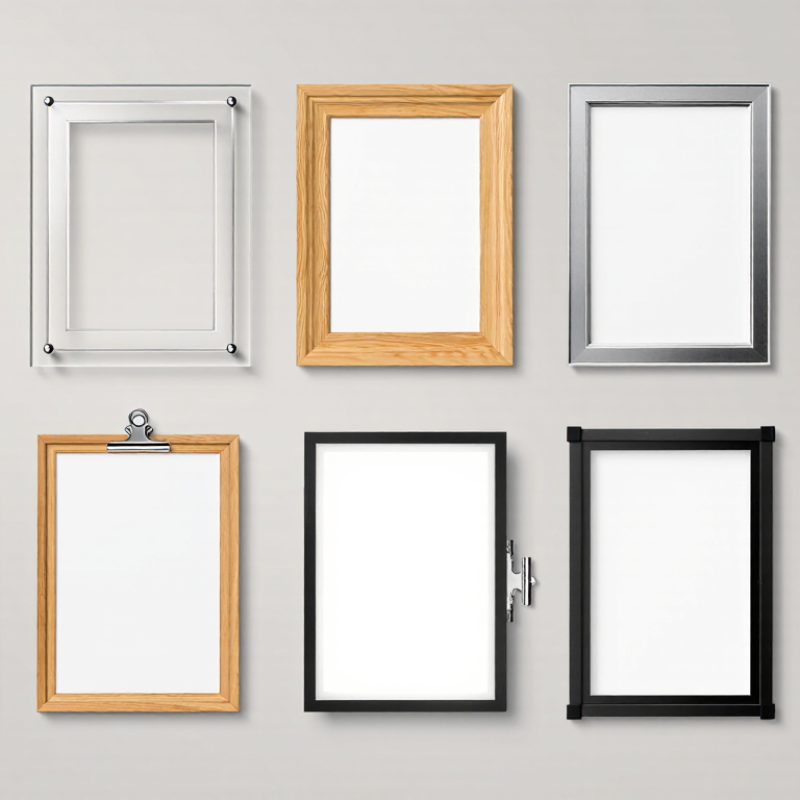
A poster frame is a small system, not merely a border. Its main parts include the profile, glazing, backing board, fasteners, and hanging hardware. Snap frames use hinged aluminum profiles for quick changes. Slide-in frames suit simple indoor displays. Magnetic, clip, acrylic, wooden, and backlit designs serve different visual needs. Outdoor models require sealed edges, UV-resistant glazing, and stronger anchors.
Material choice affects weight, safety, maintenance, and environmental claims. Aluminum offers low weight and corrosion resistance, while wood adds warmth but may vary with humidity. Acrylic is lighter than glass and resists impact, although it can scratch more easily. Recycled board backing can reduce material demand, but its stiffness must be tested. UNEP’s Global Resources Outlook 2024 warns that global resource extraction could rise by 60% by 2060 without stronger efficiency measures. That makes honest material documentation important.
Display function should guide the purchase. Anti-glare glazing improves reading under shop lighting. UV-filtering glazing helps protect printed colors near windows. Backlit frames increase visibility, but they require measured power use and safe cable routing. The U.S. Department of Energy reports that LEDs use at least 75% less energy than incandescent lighting, supporting efficient illuminated displays. Still, LED performance varies. A frame can look premium yet fail through weak corners, loose springs, or unclear recycling instructions. Buyers should request load ratings, replacement-part details, and test evidence before ordering.

Global buyers can classify the top 10 poster frame types by structure, material, display purpose, and installation method. The main categories are standard glass frames, acrylic frames, clip frames, magnetic frames, snap frames, poster rails, lightbox frames, shadow box frames, wooden frames, and metal frames. This method supports clearer purchasing decisions. It also exposes practical differences.
Standard glass frames suit offices and galleries with controlled interiors. Acrylic frames reduce breakage risks during international shipping. Clip frames offer low-cost display access. Magnetic frames allow fast poster changes. Snap frames support frequent retail updates. Poster rails work well for hanging graphics. Lightbox frames improve visibility in dim spaces. Shadow boxes protect thicker printed materials. Wooden frames add warmth. Metal frames provide a cleaner commercial appearance.
Industry data supports this segmentation. Grand View Research’s 2024 picture frame market assessment values the global market at roughly USD 1.5 billion in 2023, with demand influenced by home décor and commercial displays. Smithers’ print industry analysis also highlights continued demand for short-run, customized graphics. These findings suggest flexibility matters, although frame-specific data remains limited. This classification is useful, not perfect.
Tips: Match the frame to shipping conditions, poster thickness, viewing distance, and replacement frequency. Test corner protection before ordering large volumes. Request samples. A low-cost frame may create higher damage rates. Check glazing clarity under direct light. Confirm hanging hardware for the destination wall. Buyers should also compare recycled content and packaging weight, because sustainability claims require supplier evidence, not assumptions.
| No. | Poster Frame Type | Basic Classification | Typical Materials | Common Poster Formats | Front Protection | Mounting and Access | Best Fit for Global Buyers |
|---|---|---|---|---|---|---|---|
| 1 | Snap-Open Frame | Retail display | Extruded aluminum profiles with plastic or metal corners | A4, A3, A2, A1, A0 and custom sizes | Clear PET, acrylic or polycarbonate cover | Wall-mounted; hinged rails open from the front for quick poster changes | Stores, shopping centers, transport areas and frequently updated promotions |
| 2 | Acrylic Poster Holder | Countertop display | Transparent acrylic sheet, sometimes with a metal or acrylic base | A6, A5, A4, A3 and small custom inserts | The acrylic pocket itself protects the printed insert | Freestanding on counters, shelves or reception desks; top or side loading | Hotels, offices, restaurants, exhibitions and point-of-sale communication |
| 3 | Magnetic Poster Frame | Quick-change display | Magnetic strips with PVC, aluminum or paperboard backing | A4, A3, A2, A1 and selected standard poster sizes | Usually a clear PVC or PET cover; some versions are coverless | Adhesive, hanging or wall-mounted; poster changes require no tools | Menus, notices, campaign graphics and environments requiring frequent updates |
| 4 | Wooden Poster Frame | Interior décor | Solid wood, engineered wood or wood veneer with paper or MDF backing | A4, A3, A2, A1, A0 and common inch-based sizes | Glass or transparent acrylic, depending on weight and safety requirements | Wall-mounted with hooks or brackets; rear clips or tabs for access | Homes, galleries, hospitality interiors and premium-looking décor projects |
| 5 | Aluminum Snap Frame | Commercial signage | Anodized or powder-coated aluminum with a rigid rear panel | A4 through A0, B-series sizes and custom dimensions | Anti-glare PET, acrylic or polycarbonate sheet | Wall, ceiling or freestanding systems; front-loading frame rails | High-traffic commercial locations where durability and repeated access matter |
| 6 | Backlit Poster Frame | Illuminated display | Aluminum housing, LED modules, diffuser and printed-film support | A4, A3, A2, A1, A0 and large-format custom sizes | Clear acrylic or polycarbonate front panel; some fabric systems are open-front | Wall-mounted, suspended or freestanding; requires electrical connection | Airports, retail campaigns, trade shows and locations needing strong visual impact |
| 7 | Outdoor Weather-Resistant Frame | Outdoor signage | Powder-coated aluminum, galvanized steel, sealed plastic or stainless hardware | A4, A3, A2, A1 and custom outdoor poster sizes | Gasketed acrylic, polycarbonate or PET with varying UV resistance | Wall, post or pavement mounting; locking or sealed access is common | Outdoor notices, property marketing, public information and event signage |
| 8 | Lightweight Foam Board Frame | Temporary display | Foam board, corrugated plastic, thin PVC or lightweight composite | A3, A2, A1, A0 and custom exhibition panels | Usually no cover; optional laminate or protective film | Adhesive strips, hook-and-loop fasteners, easels or simple brackets | Short-term events, exhibitions, classrooms and cost-sensitive promotional projects |
| 9 | Poster Rail or Hanging Frame | Suspended display | Aluminum or plastic top and bottom rails with cords or wire | Portrait and landscape posters from A4 to large custom widths | Normally no rigid front cover; optional clear film may be added | Suspended from ceilings, walls or display panels; poster slides into rails | Retail windows, museums, offices and displays where flexible positioning is needed |
| 10 | Lockable Notice Board Frame | Public information | Aluminum or steel cabinet, cork or felt backing, hinges and lock | A4, A3, A2, A1 and multi-sheet layouts | Hinged glass, acrylic or polycarbonate door | Wall-mounted or supported on posts; lockable front access | Schools, residential buildings, workplaces and public facilities requiring controlled access |
Poster frames vary widely by mounting method, opening design, and protection level. Wall-mounted snap frames suit retail corridors and exhibition areas. Their hinged profiles open quickly for frequent poster changes. Clip frames offer a slim appearance, but changing large prints can feel awkward. Magnetic frames provide fast access and work well for temporary campaigns. They may need stronger magnets for thick paper. Screw-fixed frames create a stable, permanent display. Hinged lockable frames add controlled access in public spaces. Slide-in frames are practical where staff need rear loading. Freestanding frames support movable displays near entrances. Ceiling-suspended frames improve visibility in open interiors. Weather-resistant frames protect posters in covered outdoor locations.
Opening systems should match the buyer’s daily workflow. Front-opening designs reduce installation time and avoid moving heavy furniture. Back-loading designs can look cleaner, yet wall clearance becomes important. Check the frame depth, poster tolerance, and replacement frequency before ordering. A 700 × 1000 millimeter poster may need extra clearance for curled edges. Protection systems also deserve careful attention. Clear acrylic is lighter than glass and handles transport better. Glass offers a refined view but increases shipping weight and breakage risk. UV-resistant glazing helps slow fading near windows. Sealed profiles can reduce dust and moisture entry, although they are not automatically waterproof. I have seen buyers focus on appearance and overlook access space. That mistake becomes expensive during weekly updates. No frame is perfect. Choose based on use, handling, climate, and maintenance, not appearance alone.
Choosing poster frames for global buyers starts with the wall, not the catalogue. ISO 216 sizes make A-series posters easier to source across markets. Snap frames suit retail campaigns and quick artwork changes. Clip frames offer low-cost display for offices and classrooms. Magnetic frames look cleaner in galleries and hotels. Aluminum profiles resist warping better than untreated wood in humid locations. According to Grand View Research’s 2024 picture frame market analysis, the global market is expanding steadily, with demand supported by commercial and residential decoration. The figures vary between reports, so procurement teams should avoid treating forecasts as guarantees.
Location changes the specification.
Outdoor posters need UV-resistant glazing, sealed backs, and drainage details. Busy transport areas may require tamper-resistant fasteners. Backlit frames improve visibility in dim corridors, but they consume more energy and need accessible maintenance. For shipping, flat-pack acrylic frames can reduce volume, while wooden frames may provide a warmer experience in hospitality spaces. The World Bank’s Logistics Performance Index shows major differences in delivery reliability between countries. That makes replacement parts and standardized hardware especially valuable. A frame that works perfectly in a dry showroom may fail beside a humid coast.
Tips: Confirm local poster sizes before ordering. Test glare under real lighting. Check metric and imperial measurements twice. Ask for recycled-content data, but verify the certificate. I have seen “universal” frames fit poorly because tolerances were ignored. A small gap can become a visible problem. Choose ten frame types only after comparing size, climate, security, replacement speed, and installation skill.
Global buyers commonly compare ten poster frame types: wooden, aluminum, acrylic, clip, magnetic, snap, poster rail, backlit, tabletop, and shadow box frames. Each suits a different display environment. In my sourcing experience, aluminum frames often provide consistent sizing and lower moisture risk. Wooden frames offer warmth, but grain variation and warping require closer inspection. Acrylic looks modern and reduces breakage, yet its protective film can hide scratches during production checks. Small details matter.
Quality should be verified through samples, dimensional measurements, surface checks, and repeated opening tests. Ask for material specifications and inspection records. For public installations, confirm that edges, coatings, and mounting parts meet the destination market’s applicable safety requirements. Compliance is not one global checklist. It can vary by country, venue, and material. Some buyers overlook packaging documentation. That can create delays.
Packaging must protect corners, glazing, and assembled hardware. Use foam separators, moisture barriers, strong cartons, and clear carton markings. A practical drop test is useful, although it cannot copy every shipping condition. Compare total landed cost, not only the factory price. Include tooling, inserts, freight volume, import charges, defect rates, and replacement handling. A cheaper frame may become expensive after damaged deliveries. I still find packaging estimates imperfect, especially for mixed-size orders. Rechecking carton dimensions before production is worth the extra time.